
Review · POLAND
Gdansk: City Tour Live Guided by Golf Cart/Buggy Sightseeing
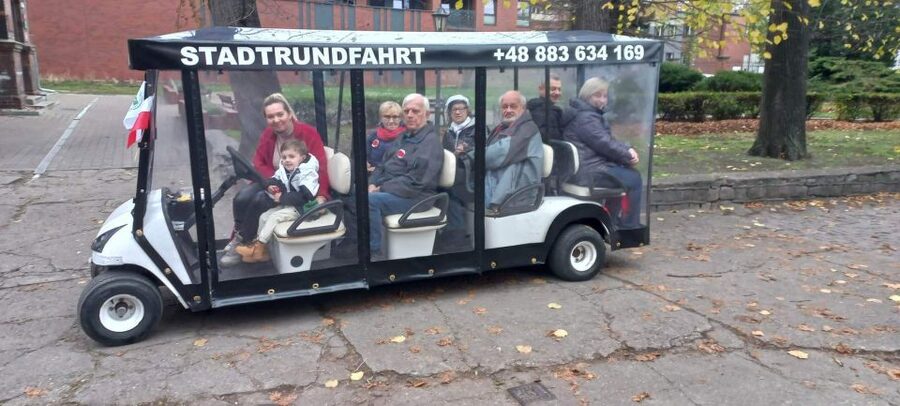
Gdańsk’s story stretches from medieval trade to the birth of modern democracy, and this golf cart tour connects those chapters in a surprisingly short time. You roll from the handsome Long Market and its red-brick churches to the shipyard where the Solidarity movement helped bring down communist rule in Poland.
I like the live guide format, since you can ask questions instead of listening to a fixed recording. I also like the broad route: the tour reaches the riverfront, Old Town churches, the Second World War Museum area, and the shipyard, not just the postcard streets. The main thing to consider is the open or lightly enclosed buggy. It runs in rain or shine, and one passenger found the heating had failed on a cold day.
Key points
- A useful first look at Gdańsk: Cover major Old Town sights and the shipyard before choosing where to return on foot.
- More than the tourist center: The route includes the European Solidarity Centre, Gdańsk Shipyard, the Polish Post Office, and the Second World War Museum.
- Guides with personality: Michael, Alex, Maciej, Maryana, and others are praised for personal stories, local pride, and flexibility.
- Good value at $8: The low price is especially attractive when the ride lasts close to two hours, or longer with a small group.
- Flexible pickup: Hotel pickup is available within two kilometers of Neptune’s Fountain, with drop-off near the fountain.
- Weather matters: Dress for the forecast. The tour operates in all weather, and buggy comfort can vary.
Why a golf cart is a smart way to meet Gdańsk
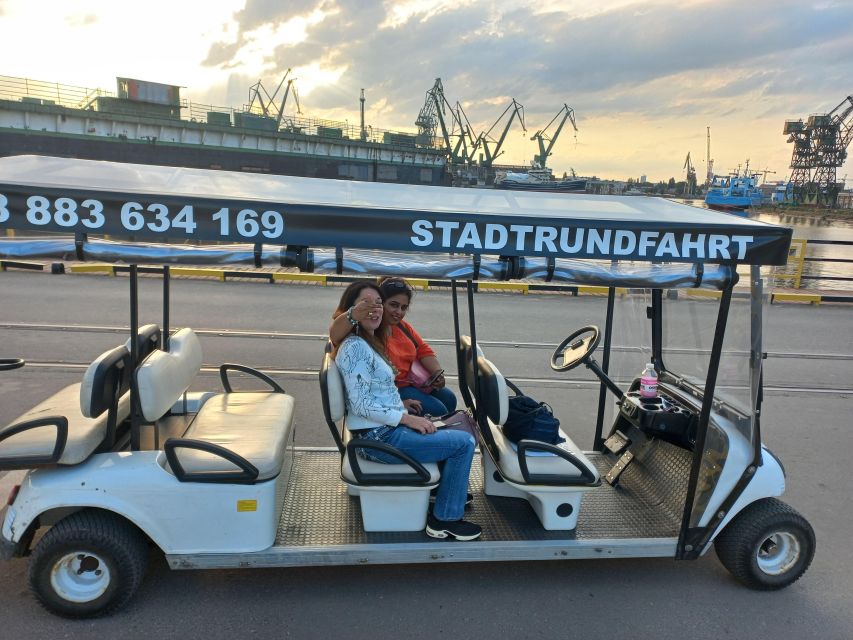
Gdańsk’s central sights are close enough to walk, but the city’s story is spread across a wider area. A golf cart lets you see the formal heart of the Old Town, then reach the shipyard and modern historical sites without spending your first day working out trams, walking routes, and distances.
You sit back while the guide points out details along the way. At stops, the guide may leave the buggy with you and explain the site in person. That matters at places such as St. Bridget’s Church and the Polish Post Office, where a quick look at the façade tells you little without context.
This is not a museum tour with long indoor visits. It is a moving introduction, with short sightseeing stops of roughly three to five minutes at many locations. You get orientation and background, then return later to the places that catch your interest.
The price is a major reason to consider it. At $8 per person, even a one-hour ride offers a cheap overview of a city with many separate sights. If your tour reaches two hours, or stretches longer because the group is small, the value becomes unusually strong.
More Dune Buggy Tours in Poland:
- Krakow: City Sightseeing Tour Eco Electric Buggy Golf Cart
★ 4.7 · 3,143 reviews - Krakow: Extended City Sightseeing Tour – Eco Buggy Golf Cart
★ 4.7 · 794 reviews - Krakow: Guided City Tour by Golf Buggy (with hotel pickup)
★ 5.0 · 426 reviews
Starting near Neptune’s Fountain and Long Market
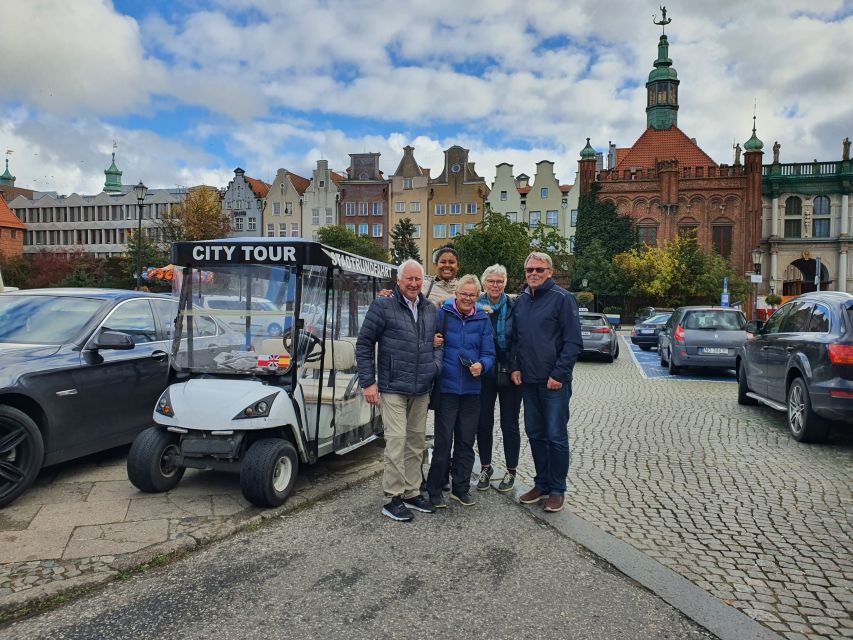
The usual meeting point is near Neptune’s Fountain on Long Market, Gdańsk’s grand central street. Look for the main square and the nearby Red Dog Saloon Bar. If you choose pickup, the operator can collect you from a location in the historic center within two kilometers of the fountain.
Long Market gives you the right opening scene. Ornate townhouses line the street, and Neptune’s Fountain provides one of the city’s best-known landmarks. The guide uses this area to explain how Gdańsk developed as a port and trading city, and how war and rebuilding changed its appearance.
The first stop is brief, so do not expect a full walking tour of every façade. Instead, use it to get your bearings. You can also ask the guide what deserves a return visit later in your stay.
Golden Gate and the grand Old Town streets
The Golden Gate marks the traditional entrance to the central city. Its decorative design introduces the civic confidence of old Gdańsk, while the streets beyond lead toward Long Market and the river.
The cart is useful here because you can see the relationship between the gate, the main square, and the surrounding streets without having to navigate through them on your first attempt. Your guide may add details about the city’s changing names, rulers, and fortunes, though the exact emphasis depends on the person leading your tour.
This is one place where the short stop can feel limited. You will see the gate and hear its story, but you will not have much time for close architectural study. Save that for a later walk with your camera.
St. Mary’s Church, the red-brick giant
St. Mary’s Church is one of the tour’s essential stops. It is presented as the largest church in the world built in red brick, a fitting claim in a city famous for brick Gothic architecture.
The building is large enough to make a quick visit feel incomplete. The guide helps you understand its scale, purpose, and place in Gdańsk’s religious and civic life, while the short stop gives you a chance to look inside or around the church area depending on timing and access.
Do not confuse sightseeing here with a full church visit. The tour is designed to introduce the site, not replace time inside it. If the church matters to you, return later and give it more time.
A few more ATV and quad tours around Poland worth a look
- Krakow: Guided City Tour by Golf Buggy with Hotel Pickup
★ 4.8 · 18 reviews - Ubud: Guided ATV Quad Bike Jungle Adventure with Lunch
★ 4.8 · 4,881 reviews - Lanzarote: Guided Off-Road Volcano Buggy Tour
★ 4.7 · 4,385 reviews - 3 Hour Guided TomCar ATV Experience in Sonoran Desert
★ 5.0 · 1,947 reviews
The Motława river, the Crane, and the port
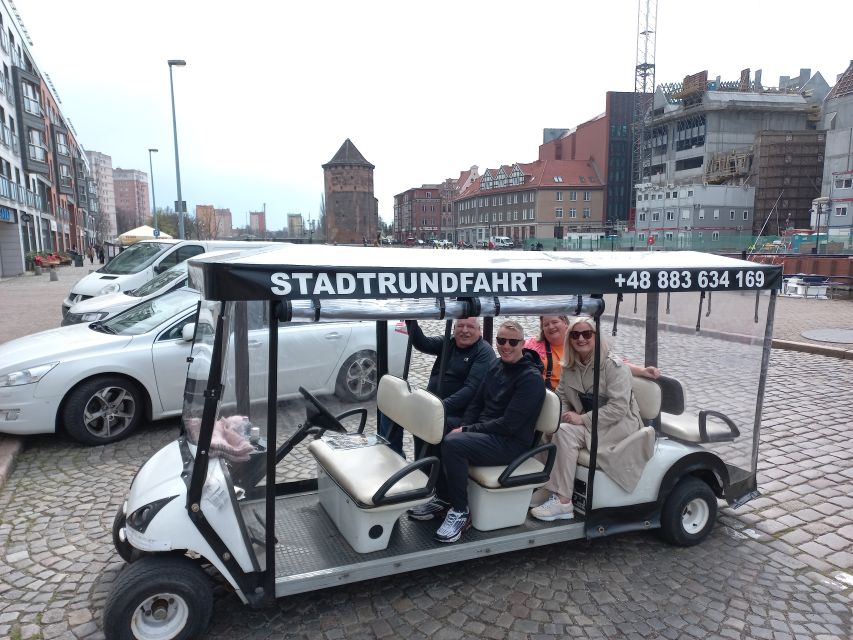
The riverfront is one of the most photogenic sections of the route. You see the historic port on the Motława, with the Great Harbor Crane as its signature structure.
The medieval crane is not merely a pretty riverside building. It points to Gdańsk’s old working life, when the port handled cargo and ships under very different conditions from today. The National Maritime Museum nearby adds context for Poland’s relationship with the sea.
This section works especially well from a cart because you can take in the waterfront without committing to a long walk. The drawback is that a short stop may leave you wanting more time along the river. Plan to return for a slower stroll, especially if you want photographs.
War, occupation, and the Polish Post Office
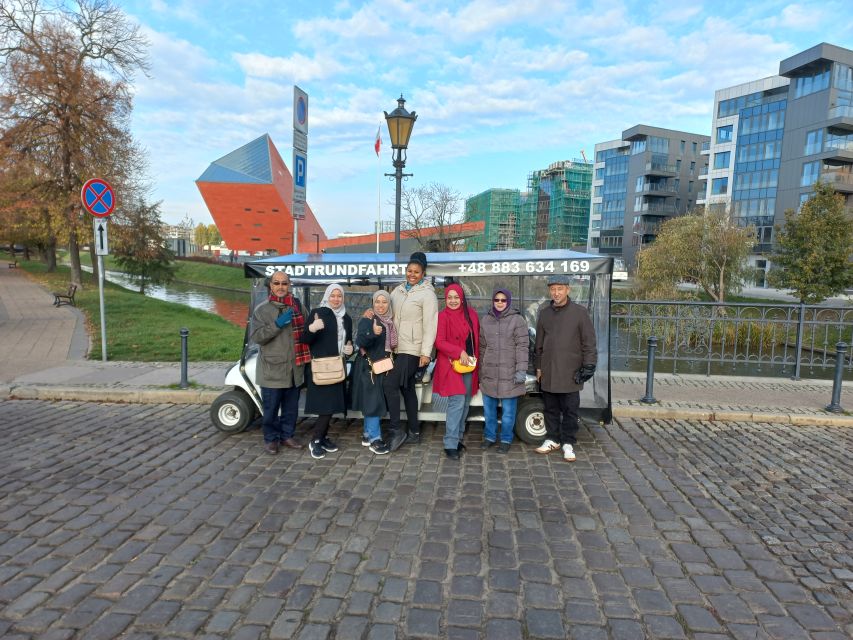
The tour then moves into Gdańsk’s twentieth-century story. The Museum of the Second World War is one of the city’s major historical sites, and the Polish Post Office is linked to the defense of Gdańsk at the start of the war.
The guide gives you an outdoor introduction and helps place these sites within the city. That background is useful because Gdańsk can look serene today, while its recent past was marked by destruction, occupation, and difficult political change.
Again, this is not a substitute for entering the museum. If you want detailed exhibits and a longer presentation, return separately. The cart tour gives you the map in your head first, which makes a later museum visit easier to place.
The shipyard and the rise of Solidarity
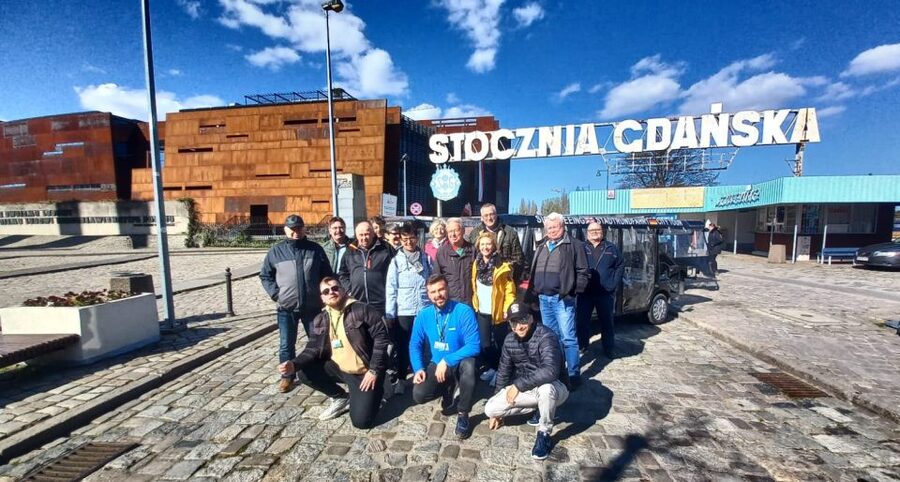
For many people, the most meaningful section is the Gdańsk Shipyard and European Solidarity Centre. This is where the tour moves beyond medieval architecture and into the political history of modern Europe.
The shipyard is connected with the Solidarity movement, which challenged communist rule through organized labor and public protest. The tour presents Gdańsk as the place where the collapse of the socialist bloc began, a subject that guides often explain through local stories and the contrast between life under the old system and life today.
The European Solidarity Centre gives that story a major physical home. You may only see it from outside during the ride, but the guide can explain why the building and shipyard area matter. Several guides are praised for making this section especially strong. Michael is often described as passionate and full of personal anecdotes, while Alex is noted for explaining the contrast between Soviet-era society and modern Poland.
If modern political history interests you, consider making this tour your first activity and returning to the centre afterward. You will have a much better sense of why the exhibits matter.
St. Bridget’s Church and the Amber Museum
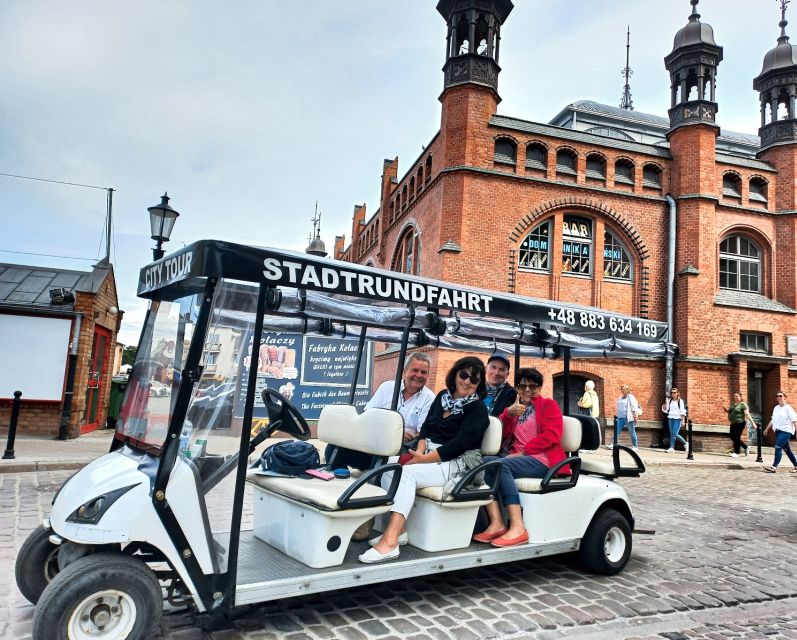
St. Bridget’s Church adds another religious stop, but it has a different feel from St. Mary’s. It is associated with an impressive amber altar, a detail worth asking about if it is not covered during the main explanation.
Amber is central to Gdańsk’s identity, and the Amber Museum gives the subject a dedicated stop. The museum can help you understand why this fossilized resin appears so often in local shops, jewelry, and decorative work.
The stop is short, so you may only receive an introduction rather than a full museum visit. If you are considering an amber purchase, the guide may also help you understand the cultural importance of the material, though shopping advice is not guaranteed.
Smaller stops that fill out the picture
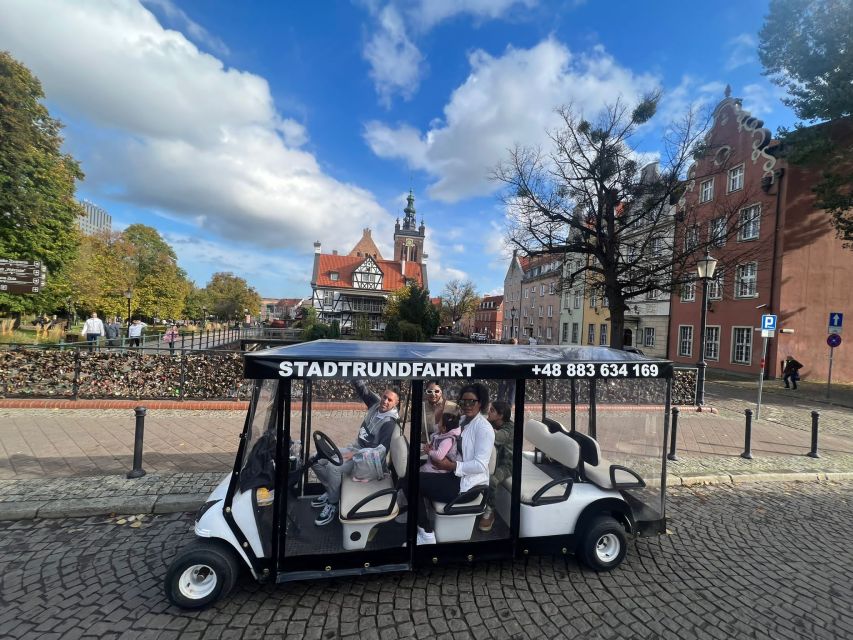
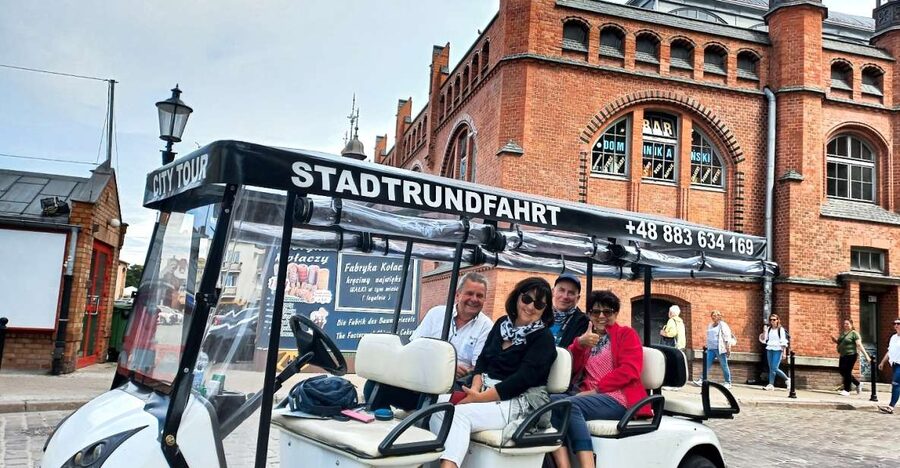
The route can also include the Gdańsk Carousel, Hala Targowa Kupców Dominikańskich, and additional views of the central streets. These stops are shorter, usually around three minutes, but they help connect the formal sights with everyday city life.
The market hall offers a different view of Gdańsk from the monumental churches and waterfront buildings. The carousel is a quick visual break rather than a major historical attraction. These brief stops may matter most when the guide uses them to answer your questions or adjust the route to your interests.
The tour can also finish near Neptune’s Fountain on Ławnicza 2. That location is handy for continuing on foot, finding lunch, or returning to the Old Town sights you passed earlier.
The guides make the difference
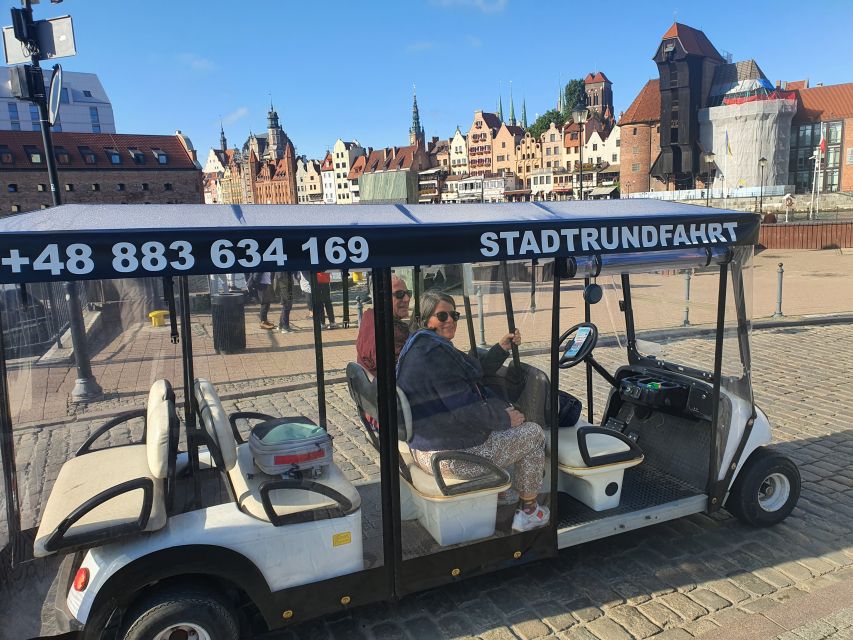
The strongest part of this tour is the human delivery. Michael is repeatedly praised for his energy, memory, personal recollections, and love of Gdańsk. Alex is described as friendly and flexible, with a talent for shaping the route around pickup needs and visitor interests.
Maciej is known for a cheerful approach, photo stops, and a slower pace when needed. Maryana has been praised for adding local suggestions, including a Polish restaurant, and for making the historical material approachable. Other guides, including Noris and Alexander, are described as warm and well prepared.
That variety is also the one uncertainty. A live tour depends on who is driving and guiding that day. Some guides talk at length, which suits you if you want a flowing history lesson but may feel too much if you prefer quiet sightseeing.
The good news is that the format allows questions. You can ask for more detail on the war, Solidarity, churches, food, or local customs instead of receiving the same speech at every stop.
Timing, comfort, and group size
The advertised duration is one to two hours. In practice, the route can last longer when traffic is light, the group is small, or the guide takes time for questions and extra stops. One private-feeling ride lasted three hours, while another family tour covered the route in about 100 minutes.
Do not treat the end time as exact. Gdańsk traffic can slow the cart, and the operator warns that delays are possible. This matters if you have a train, a timed museum entry, or a cruise departure.
Small groups are available, and several rides have felt almost private when only two or three people booked. That can lead to a more personal route and easier conversation. It can also mean the guide talks more, since the group has room for questions and requests.
The buggy may be heated, but comfort is not guaranteed on every ride. One winter passenger found the heating had failed, while others reported a warm, comfortable vehicle in freezing weather. Dress in layers and wear weatherproof clothing. The tour operates rain or shine.
The activity is wheelchair accessible, but it is wise to confirm the exact vehicle arrangement when booking if you need a particular setup. Multilingual guiding is available in English, Polish, Ukrainian, Spanish, and German.
Who should book this Gdańsk tour?
I would choose this for a first morning or afternoon in Gdańsk. You get a fast sense of the city’s layout, see the main Old Town sights, and reach the shipyard without having to plan a route yourself.
It suits cruise passengers, older visitors, families, and anyone who wants to cover a lot without a long walk. It also works well for people interested in modern Polish history, since the Solidarity section adds something a standard Old Town stroll may miss.
You may want a different option if you prefer long indoor visits, quiet independent exploration, or detailed architectural study. The three-to-five-minute stops are introductions. They are not a replacement for the Second World War Museum, European Solidarity Centre, or Amber Museum.
Final verdict: book it for orientation and local stories
At $8, this is an easy value choice if you want a broad introduction to Gdańsk. I especially like the combination of medieval churches, the Motława port, wartime sites, and the shipyard. That range gives you a more honest picture of the city than a tour limited to Long Market.
Book it early in your stay if you can. You will learn where to spend your remaining time, and the live guide can point you toward subjects that fit your interests. Just allow some schedule flexibility, dress for the weather, and understand that the tour is a moving overview rather than a series of full museum visits.
FAQ
Where does the Gdańsk golf cart tour meet?
The meeting point is near Neptune’s Fountain on Long Market, close to the Red Dog Saloon Bar. Pickup is also available from a chosen location in the historic city center within two kilometers of Neptune’s Fountain.
How long does the tour last?
The stated duration is one to two hours. The actual length can vary with traffic, group size, questions, and route flexibility.
Which places does the tour visit?
The route can include Long Market, Golden Gate, St. Mary’s Church, the Motława Crane and National Maritime Museum, the Second World War Museum, Gdańsk Shipyard, European Solidarity Centre, St. Bridget’s Church, Amber Museum, the carousel, market hall, and Polish Post Office.
Is the tour guided live?
Yes. A live guide provides commentary and answers questions. Tours are offered in English, Polish, Ukrainian, Spanish, and German.
Is hotel pickup included?
Pickup is optional and is available from hotels or other locations in Gdańsk’s historic city center within two kilometers of Neptune’s Fountain.
Does the tour operate in bad weather?
Yes. The tour runs rain or shine, so you should wear clothing suited to the forecast. The buggy may be heated, but comfort can vary.
Just added around Poland
- Krakow: Guided City Tour by Golf Buggy with Hotel Pickup★ 4.8 · 18 reviews
- Krakow: Extreme Quad & Shooting Adventure with Hotel Pickup★ 4.7 · 21 reviews
- Krakow: Old Town City Sightseeing Tour Eco Buggy Golf Cart★ 4.6 · 39 reviews
- Krakow: Extreme Quad Off-Road Adventure & BBQ Lunch★ 4.7 · 14 reviews
- Krakow: City Sightseeing Tour by Electric Buggy Golf Cart★ 4.8 · 17 reviews
- Gdansk: Top Unlimited Beer & Highlights Tour by Golf Buggy★ 5.0 · 86 reviews
- Gdansk: City Sightseeing Tour Eco Electric Buggy Golf Cart★ 4.5 · 73 reviews
- From Krakow: ATV/Snowmobile Ride, Shooting & Hot Springs★ 5.0 · 15 reviews
Poland ATV & Quad Tours, compared.
Krakow: City Sightseeing Tour Eco Electric Buggy Golf Cart
Read our review →
Krakow: Extended City Sightseeing Tour – Eco Buggy Golf Cart
Read our review →
Krakow: Guided City Tour by Golf Buggy (with hotel pickup)
Read our review →Krakow: City Sightseeing Tour Eco Electric Buggy Golf Cart
Read our review →
Gdansk: Top Unlimited Beer & Highlights Tour by Golf Buggy
Read our review →
Gdansk: City Sightseeing Tour Eco Electric Buggy Golf Cart
Read our review →
Krakow: Old Town City Sightseeing Tour Eco Buggy Golf Cart
Read our review →
Krakow: Extreme Quad & Shooting Adventure with Hotel Pickup
Read our review →Browse the lists this tour appears in