
Review · ICELAND
Mýrdalsjökull: South Coast ATV Quad Bike Safari
The most memorable part of this South Coast ATV safari is the changing ground beneath your wheels. You move from broad black sand to rough tracks, stream crossings, fields, and a mountain valley, with the Atlantic on one side and Mýrdalsjökull Glacier on the other. The famous DC3 wreck is only one stop along the way.
I like the mix of real Icelandic scenery and hands-on driving, and I like that guides such as Anthony, Pawel, Bjarki, and Magni are praised for clear instruction, local stories, and patience with first-time riders. The main drawback is weather: wind, rain, snow, and swollen rivers can change the route, and the glacier stop may not be possible.
Key points to know before you book
- The two-hour ride is the better choice: It gives you time for the plane wreck, beach, river crossings, and mountain valley rather than only a quick taste.
- You drive through several types of ground: Expect black sand, rocky tracks, fields, streams, and open coastal stretches.
- The DC3 wreck is part of the route: You stop at the famous fuselage on Sólheimasandur and hear about its history from your guide.
- You share one ATV with another person: Single riders and odd-numbered groups need a single ATV, with an extra charge paid locally.
- Weather can reshape the outing: Heavy rain may make rivers impassable, while strong wind can make the beach section feel wild.
- You need a valid driver’s license: Warm clothes, waterproof shoes, and gloves are also important, even though insulated gear is supplied.
Riding from Mýrdalsjökull Base Camp
You meet at Mýrdalsjökull Base Camp on Ytri Sólheimar road 222. Look for Icelandic Mountain Guides by Icelandia, Mýrdalsjökull Base. The meeting point can be farther up the road than some map directions suggest, so allow a little time to find the correct building.
Hotel pickup and drop-off are not included. That makes this a better fit for a self-drive South Coast day than for someone relying on a Reykjavik transfer. From Reykjavik, one rider reported a drive of about two and a half hours, so you will want to combine the outing with other South Coast stops rather than make the journey only for a short ride.
Before setting out, you receive a safety briefing and an introduction to the ATV controls. You need a valid driver’s license to drive. The standard arrangement is one ATV per two people, which suits couples and friends who are happy to share the driving or ride together.
If you are traveling alone, or your group has an odd number, you need to book a single-rider ATV. That costs extra and is paid at the site. Ask about this before arrival, since it is an easy detail to miss when comparing the headline price.
A few more ATV and quad tours around Iceland worth a look
- Twin Peaks ATV Iceland Adventure from Reykjavik
★ 5.0 · 663 reviews - Quad Bike Tour on Black Lava Sands from Mýrdalur
★ 5.0 · 502 reviews - Reykjavik: Countryside Guided ATV Tour with Transfers
★ 4.8 · 272 reviews
Why I recommend the two-hour option
The experience is sold in one-hour and two-hour versions, with the total duration listed as one to two hours. I would choose two hours unless your schedule is very tight. The longer ride gives you time to reach more varied ground, stop for photographs, and enjoy the ATV itself instead of treating the activity as a quick transfer to the plane wreck.
The shorter option can make sense if you are fitting this around a packed South Coast day. It offers a taste of the ride and the black-sand setting, but it limits how much time you have for the inland section. One rider who initially chose the one-hour express version changed to two hours and felt the extra time was well spent.
At $144 per person, this is not a cheap photo stop. You are paying for a guide, protective clothing, the vehicle, instruction, and access to terrain you would not explore in a normal rental car. The value improves considerably on the two-hour outing, especially if you want an active experience rather than another roadside viewpoint.
The first run across Sólheimasandur
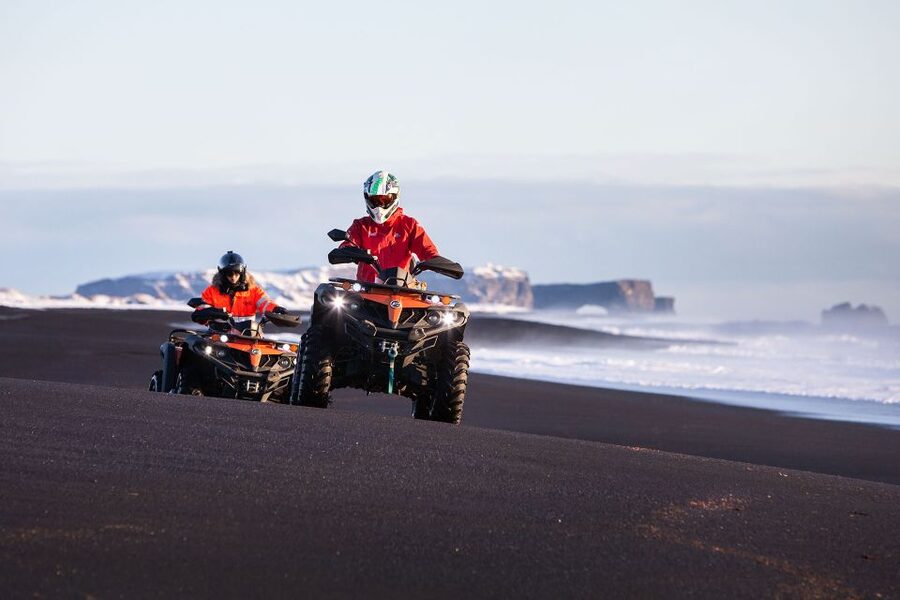
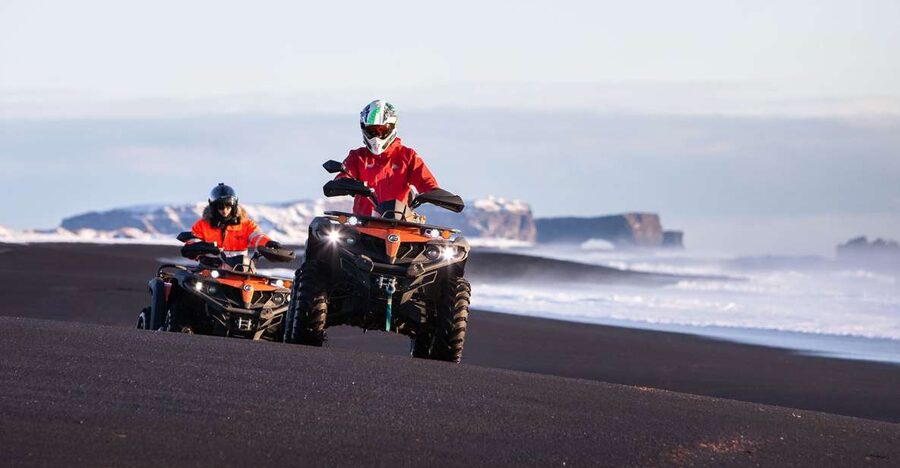
The opening ride takes you onto the dark, open plains of Sólheimasandur. This broad area has a stark, almost otherworldly feel, with black volcanic sand under the tires and very little visual clutter. The openness lets the group build speed in suitable sections, though the guide controls the pace and slows the group when the ground or riding ability calls for it.
You are not simply sent off to find your own way. The guide leads the group, watches the riders behind, explains hazards, and adjusts the pace to the people taking part. First-time riders have found the terrain manageable, while experienced off-road drivers may get chances to open the throttle on suitable stretches.
That balance matters. An ATV tour can be frustrating if it feels like a slow convoy, but it can also become uncomfortable if the leader pushes too hard. Here, the pace is shaped by the group. If everyone can keep up, the guide may allow faster runs across appropriate sections. If not, the route remains accessible to less experienced drivers.
The DC3 wreck on the black sands
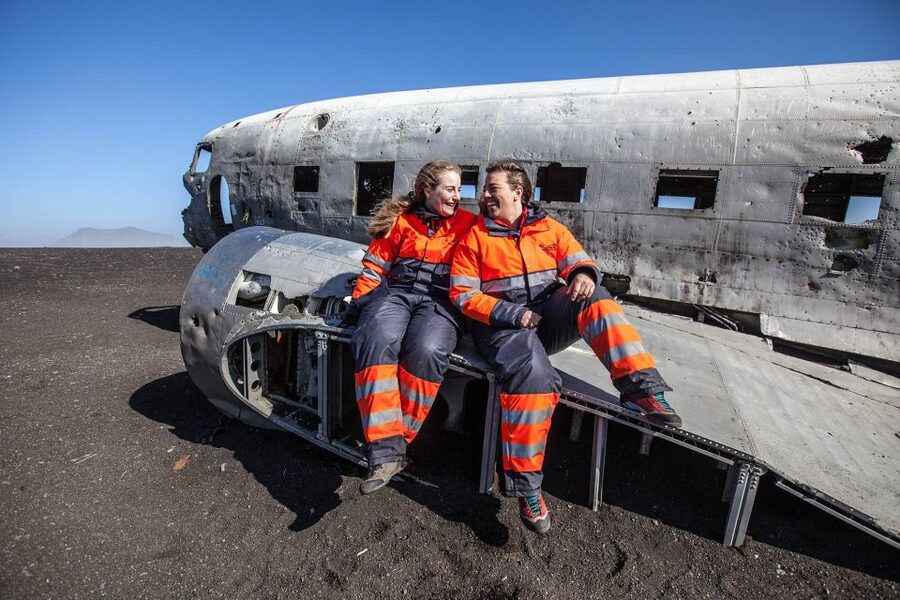
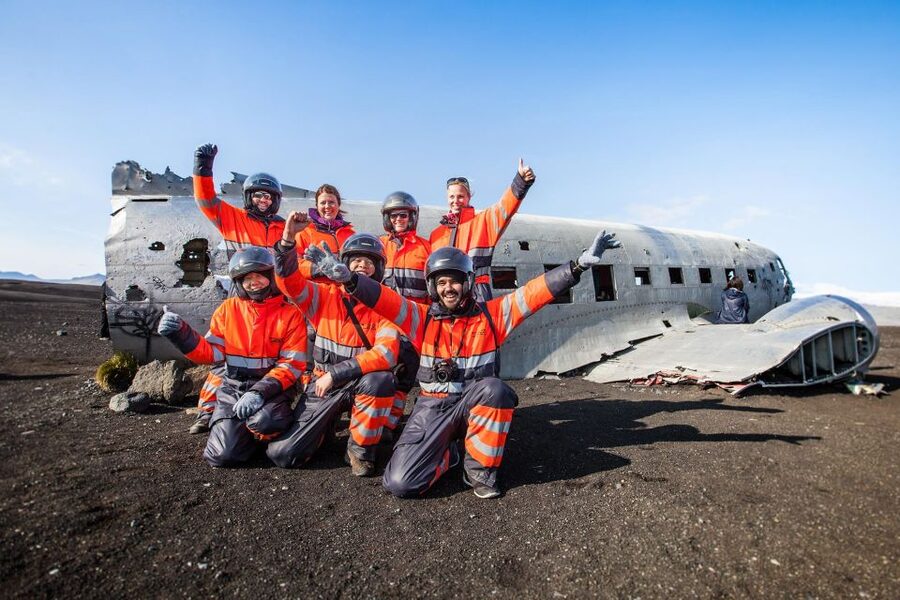
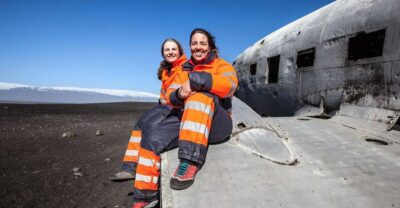
The DC3 plane wreck is the outing’s best-known stop. The aircraft crashed on Sólheimasandur in 1973, and its stripped fuselage now rests on the dark plain. The contrast is striking: pale metal against black sand, with the empty setting making the wreck feel far removed from ordinary sightseeing.
Your guide provides background about the aircraft and the surrounding area. This is one reason the stop works better as part of a guided ride than as a quick photograph. You get time to look around, hear the story, and take pictures without having to work out the route across the sand yourself.
Do not assume the plane is the whole point of the excursion. It is a major landmark, but the ride continues through several types of ground. If you have already seen photographs of the wreck, the ATV sections and coastal views are what give the experience its wider value.
Guides are also willing to take pictures for you. That is useful because you will be wearing helmets, masks, and riding gear, and you may not want to stop handling your phone while trying to photograph the group.
Same place, a different set of wheels:
- Reykjavik Quad Bike Twin Peaks Tour
★ 4.9 · 191 reviews - Reykjavik: Buggy Safari Tour with Hotel Transfers
★ 4.9 · 106 reviews - 1 hour Buggy adventure – From Reykjavik
★ 5.0 · 82 reviews - Buggy ‘Lava Field Adventure’ from Reykjavik
★ 5.0 · 72 reviews
Black beach, Atlantic wind, and Dyrhólaey
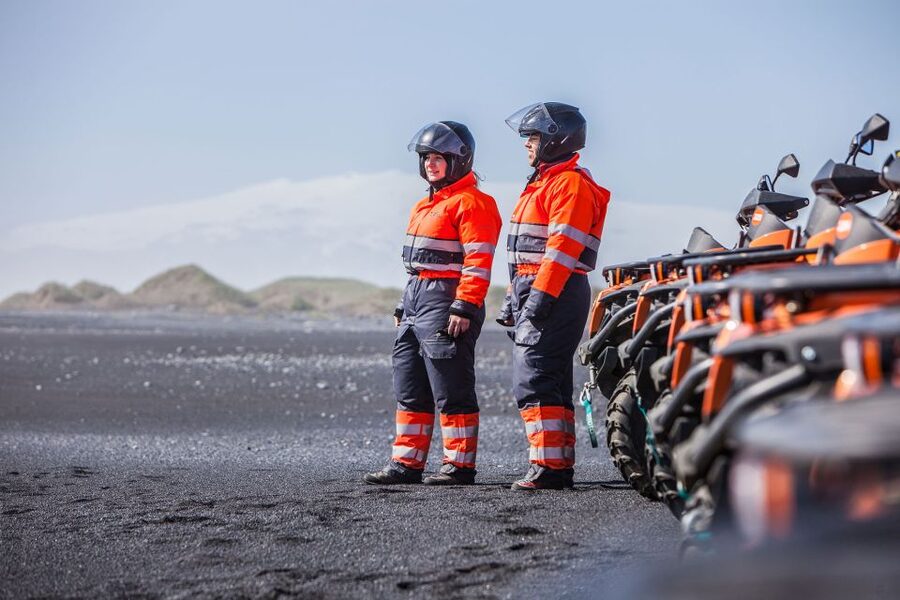
From the wreck area, the route heads toward the coast. The black beach gives you a wide view of the Atlantic and the Dyrhólaey peninsula, described here as the southernmost tip of Iceland. Looking inland, you can also see Mýrdalsjökull Glacier in the distance.
The beach section is a highlight for many riders because the surface can feel smoother and more open than the rough inland tracks. It is also where you most clearly feel Iceland’s weather. In strong wind, the ride can become physical. One winter rider described being pushed backward by the gusts, while another found the experience especially fun because of the wild conditions.
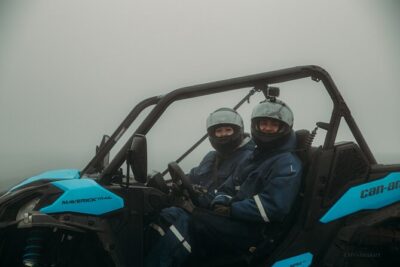
That same exposure is a practical warning. A calm forecast does not guarantee a gentle ride, and rain or wind can make the outing feel much colder than the air temperature suggests. The supplied helmet, balaclava, and insulated cover-all help a lot, but you still need warm base layers and good gloves.
The company supplies boots when weather requires them, though waterproof shoes are still listed as something to bring. I would follow that advice. Wet feet can turn an otherwise enjoyable ride into a long wait for the finish.
Rivers, fields, and the mountain valley
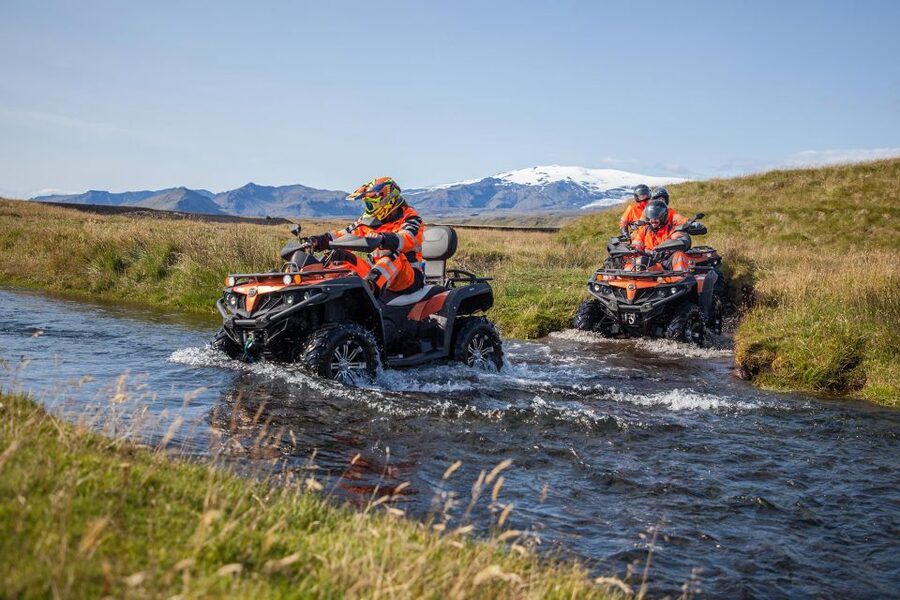
The return section follows the Jökulsá River and moves away from the open beach. This is where the ride feels most like an off-road safari. You may pass through fields, rocky ground, shallow streams, and rougher paths before crossing a river into a mountain valley.
The river crossings are not a minor detail. They add a sense of progress and make the route feel active rather than scenic only. Several riders specifically enjoyed driving through streams and water crossings, while one November outing had to avoid some rivers after heavy rain made them impassable.
That is the key weather issue for this activity. The operator may change the route for safety, and you should not expect every advertised section on every departure. A wet day can still include the beach, wreck, and other tracks, but high water may remove the river crossings or the glacier approach.
The mountain valley provides a quieter finish after the open coast. You get a different view of the area, with the surrounding mountains closing in and the glacier region visible beyond. On clear days, this final section helps explain why the tour is more than a beach ride.
Gear, comfort, and riding ability
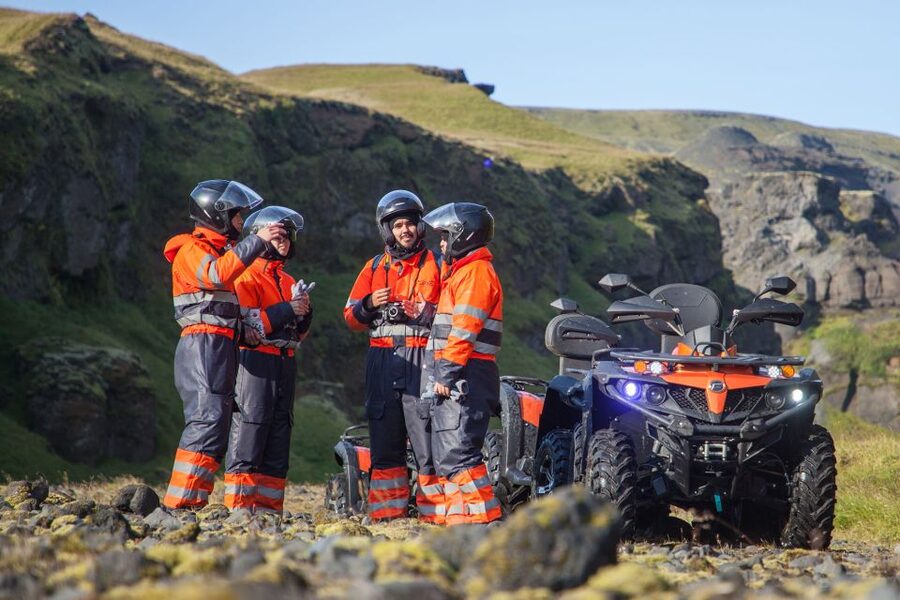
The price includes a guide, one ATV for every two people, an insulated cover-all, a helmet, and a balaclava face mask. Gloves are also supplied according to the practical equipment provided on departures. Boots may be available depending on the weather.
Wear warm layers underneath the cover-all. In cold months, your thumbs and fingers can still become chilled, so bring or use substantial gloves. A base layer is particularly useful in winter, even when the outer suit blocks much of the wind and spray.
The ride is suitable for first-time ATV users, but you still need to pay attention during the briefing. The guide explains how to operate the vehicle and how to handle the route. You should be comfortable following instructions, staying with the group, and managing uneven ground.
Children under eight cannot take part, and the activity is not suitable for pregnant women. Alcohol and drugs are not allowed. Since every driver needs a valid license, this is not an activity where an unlicensed child or passenger can take over the controls.
Guides make a real difference
The guides are one of the strongest parts of the experience. Anthony is praised for explaining Icelandic geography and daily life, keeping children engaged, and making families feel looked after. Pawel has been noted for watching the whole group, pointing out where riders can safely increase speed, and telling stories about the island and the plane.
Bjarki is known for taking time with photographs and explaining the sites, while Magni has guided departures through coastal and river sections with a friendly, informative approach. Other named guides, including Oskar, Gully, Hinrick, and Barduroli, have also been singled out for helping nervous riders and adapting the outing to the group.
You should not expect every guide to use the same route or style. Some departures may feel more relaxed, while others may include rougher paths when conditions and group ability allow. The important point is that the guide is not just there to lead the way. You also get context about volcanoes, the beach, the wreck, the glacier, and local geography.
Small groups are available. If your departure is quiet, you might receive unusually personal attention, and one winter rider ended up with what was effectively a private outing. That cannot be promised, but smaller departures make it easier to ask questions and get help with the ATV.
Who will enjoy this most
I would choose this for couples, families with older children, and friends who want something more active than sightseeing from a bus. It suits first-time ATV riders because the terrain is manageable and the guides explain the controls carefully, but it also gives experienced riders some chances to travel faster on open ground.
It is especially useful if you want to combine several classic South Coast sights in one activity: the DC3 wreck, black sands, Dyrhólaey views, glacier views, rivers, and a mountain valley. You still need time for other attractions, but the ATV route gives you access to a broader setting than a single roadside stop.
I would think twice if you dislike cold, wind, mud, or changing plans. The cover-all helps, but this is not a polished indoor attraction. You are outside on exposed ground, and the weather can affect the route. If you need a guaranteed visit to every listed section, this may not be the right choice.
The activity is also less suitable if you have no interest in driving. Sharing an ATV means one person may do much of the operating, but the core appeal remains the ride itself. For a quieter outing, a standard guided sightseeing tour may fit better.
Practical booking advice
Book the two-hour version if the price fits your budget. It gives the tour enough time to feel like a full outing, and the extra terrain is where much of the value lies. The one-hour option works as a compact add-on, but it may feel brief if you enjoy the driving.
Bring your driver’s license, warm clothing, waterproof shoes, and gloves. Do not rely on the South Coast weather being mild just because the forecast looks acceptable in Reykjavik. Conditions at the beach and near the glacier can be colder and windier.
The activity offers free cancellation up to 24 hours before departure and a reserve-now, pay-later option. That is useful for an Iceland itinerary, where weather can force changes. Still, you should leave enough flexibility in your day to handle a route adjustment or a cancelled departure.
Should you book the Mýrdalsjökull ATV safari?
Yes, if you want an active way to see the South Coast and you are comfortable with cold weather and an outdoor ride. The combination of black sand, the DC3 wreck, Dyrhólaey, glacier views, river crossings, and mountain tracks gives the experience more variety than a simple ATV spin.
I would book the two-hour ride, dress warmer than you think necessary, and confirm the single-rider charge if your group is not divisible by two. The strongest reason to go is not one isolated stop. It is the feeling of moving through Iceland’s open volcanic country under your own control, with a capable guide keeping the outing safe and informative.
FAQ
Where does the ATV tour meet?
Meet at Mýrdalsjökull Base Camp on Ytri Sólheimar road 222. Look for Icelandic Mountain Guides by Icelandia, Mýrdalsjökull Base.
How long does the ATV safari last?
The activity lasts one to two hours, depending on the option you book. Starting times vary, so check availability for the date you want.
Is a driver’s license required?
Yes. You need a valid driver’s license to drive an ATV.
How many people share one ATV?
The standard arrangement is one ATV per two people. Single riders and groups with odd numbers need a single-rider ATV, with an additional payment made locally.
What equipment is included?
The tour includes a guide, an insulated cover-all, a helmet, and a balaclava face mask. Boots may be provided depending on the weather.
What should I bring?
Bring your driver’s license, warm clothing, waterproof shoes, and gloves.
Can children or pregnant women join?
Children under eight and pregnant women cannot take part. Alcohol and drugs are also not allowed during the activity.
Just added around Iceland
- Reykjavik: ATV Ride & Whale Watching Boat Tour★ 5.0 · 15 reviews
- Reykjavik Quad Bike Twin Peaks Tour★ 4.9 · 191 reviews
- Reykjavík: Buggy Adventure to Mýrdalsjökull Majestic Glacier★ 5.0 · 19 reviews
- Reykjavik: Countryside Guided ATV Tour with Transfers★ 4.8 · 272 reviews
- Reykjavik: Lava Field Buggy Adventure★ 4.9 · 23 reviews
- Mývatn: Lake Mývatn ATV Guided Safari Experience★ 4.7 · 42 reviews
- Midnight Sun ATV Tour★ 4.9 · 24 reviews
- Buggy Adventure: Off-Road Thrills in South Iceland★ 5.0 · 12 reviews
Iceland ATV & Quad Tours, compared.
Twin Peaks ATV Iceland Adventure from Reykjavik
Read our review →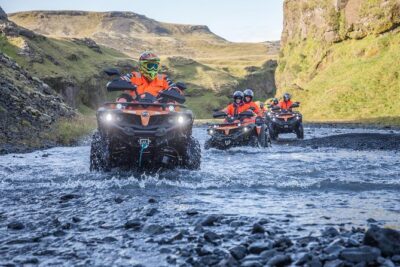
Quad Bike Tour on Black Lava Sands from Mýrdalur
Read our review →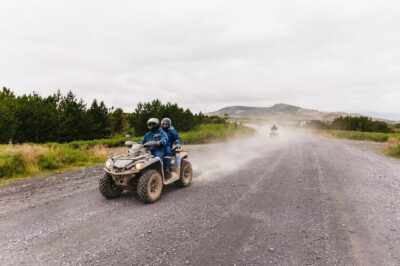
Reykjavik: Countryside Guided ATV Tour with Transfers
Read our review →
Reykjavik: Buggy Safari Tour with Hotel Transfers
Read our review →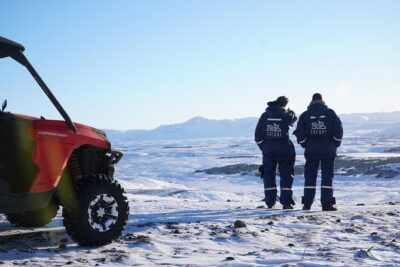
Reykjavik: South Coast, Plane Wreck, & Beach ATV Tour
Read our review →Browse the lists this tour appears in